
Introduction
In the first article, we looked at the big picture of U.S. practice management: the patient journey, core operations, revenue cycle, external ecosystem, technology layer, and the many places where administrative friction slows care.
Now we move to the first major pressure point: patient access and front office operations.
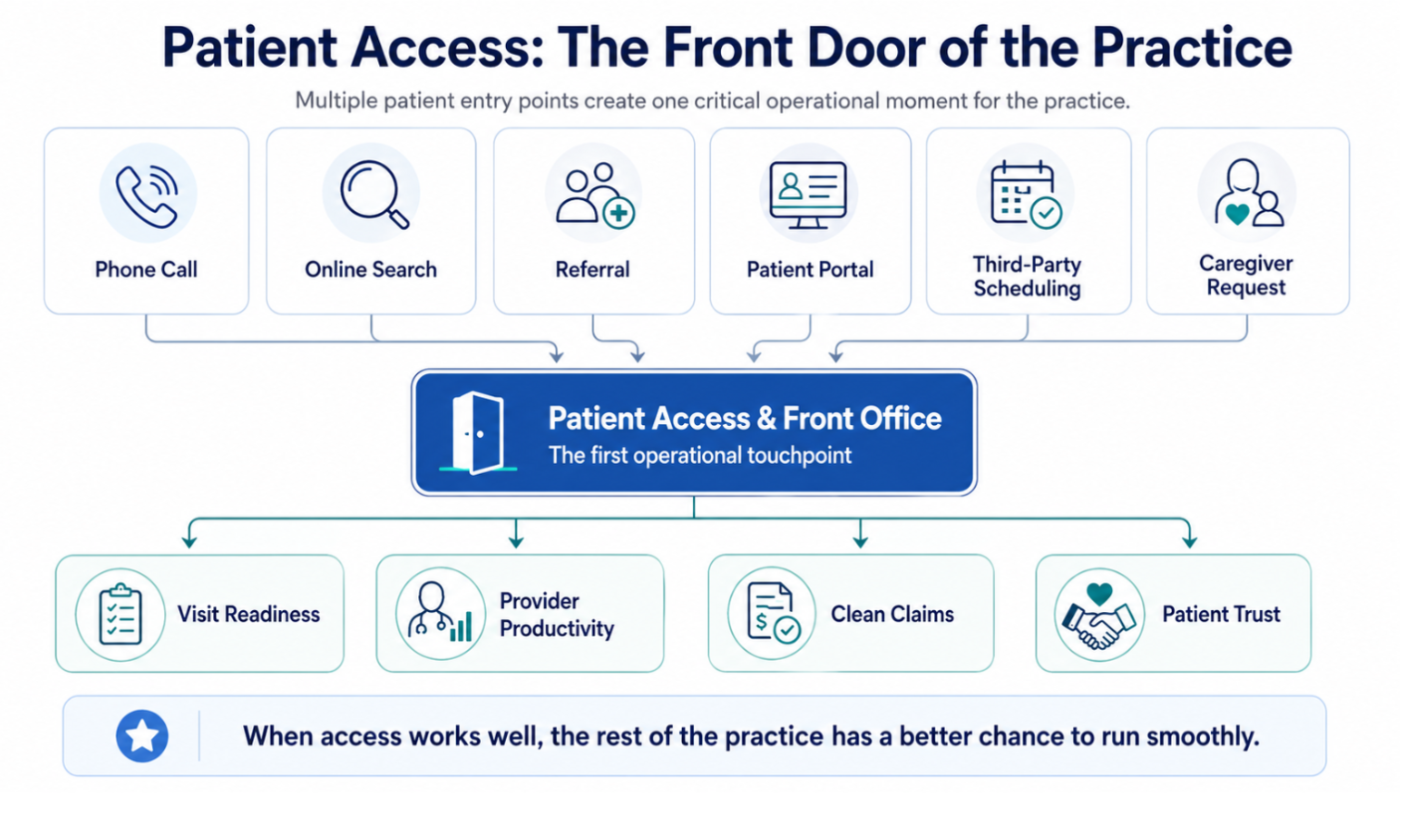
This is where the patient first touches the practice. It may start with a phone call, an online search, a referral, a portal request, or a caregiver trying to help a parent, child, or spouse get care.
From the patient’s point of view: can I get the right care, at the right time, with clear expectations?
The Story Starts Before the Visit
Imagine a patient named Maria. Maria has been dealing with knee pain for several weeks. She finally decides to see a specialist.
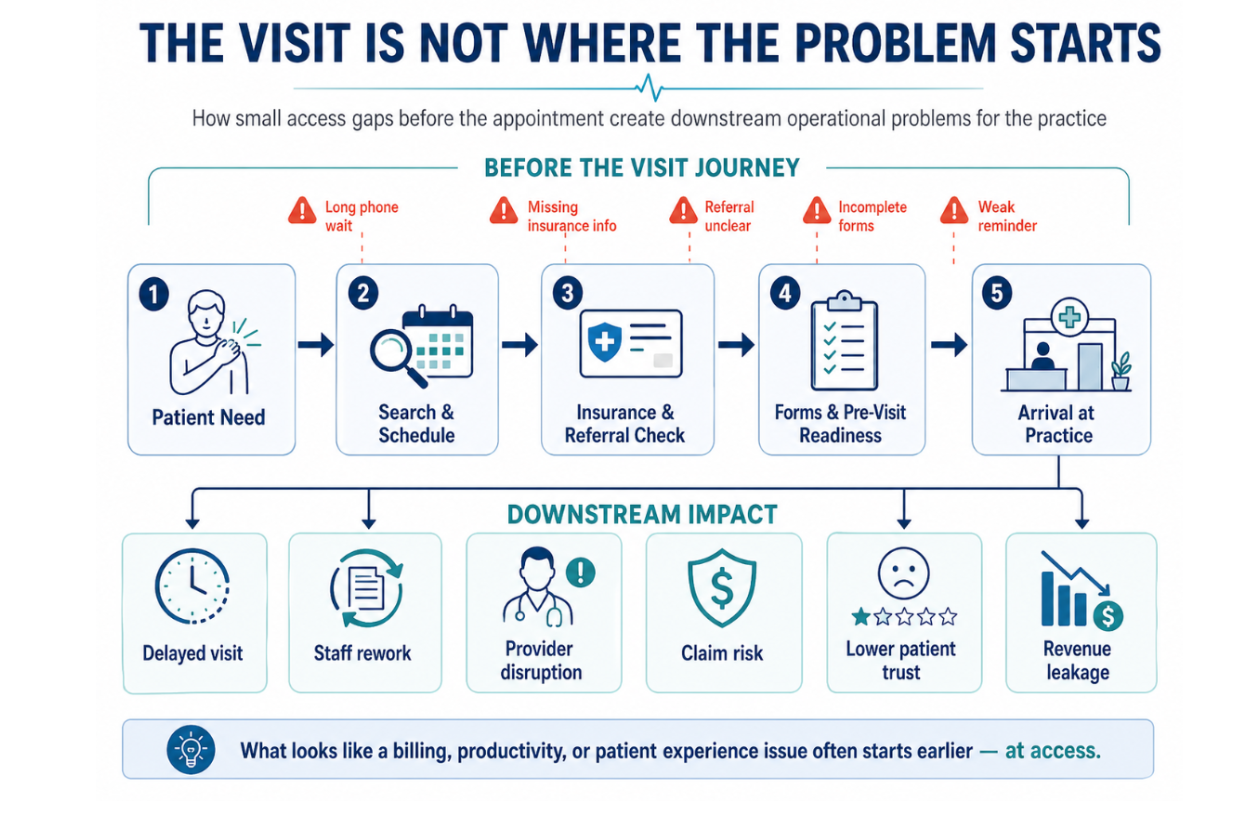
At first, the task seems simple: find the right provider and book an appointment. But the experience quickly becomes more complicated. She searches online, reads reviews, checks the provider’s website, and tries to schedule a visit. The website tells her to call. She calls during lunch and waits on hold. When she reaches someone, the scheduler asks for insurance information. Maria does not have her card nearby, so the appointment cannot be completed.
She calls back the next day. This time she gets scheduled, but later learns that her plan may require a referral. The practice sends a reminder, but the message does not clearly explain what she needs to bring. On the day of the visit, the front desk discovers that her insurance information is incomplete and the referral is missing.
Maria feels confused. The front desk feels rushed. The provider’s schedule is disrupted. The revenue cycle team may later deal with a denial. Leadership may only see the issue weeks later as a billing problem, a no-show problem, or a patient complaint.
The problem did not start in billing. It started at access.
Patient Access Is Not One Workflow
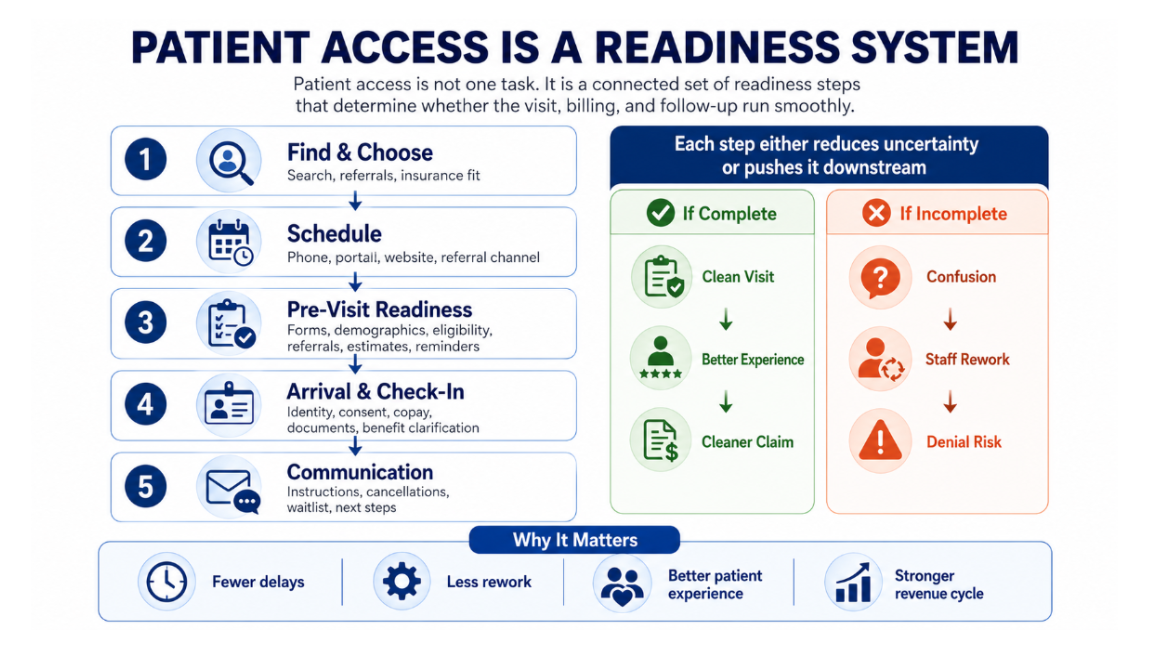
Patient access is often treated as scheduling, but that view is too narrow. A strong patient access function includes several connected steps.
Find and choose
Online presence, reviews, referrals, provider search, and insurance fit.
Schedule
Phone, portal, website, referral channel, or third-party scheduling tool.
Pre-visit readiness
Demographics, forms, insurance capture, eligibility, referrals, authorizations, estimates, and reminders.
Arrival and communication
Identity confirmation, consent, copay collection, instructions, cancellation management, and next-step guidance.
Each step matters because each step either reduces uncertainty or pushes uncertainty downstream. When patient access works well, the visit starts clean. When it does not, the visit begins with confusion.
Why This Matters to Potential Clients
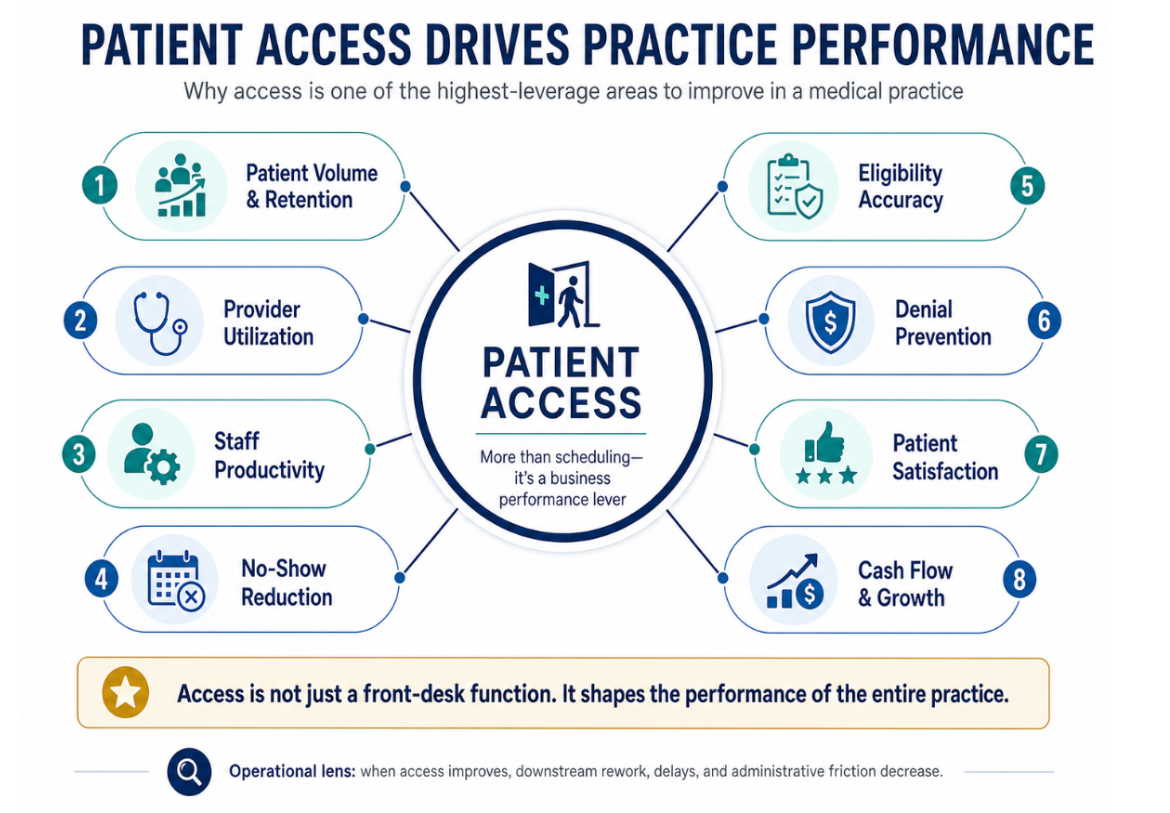
If you lead a physician group, specialty practice, MSO, clinic network, or care delivery organization, patient access is one of the highest-leverage areas to improve.
The reason is simple: access affects patient volume, provider utilization, staff workload, no-shows, eligibility errors, denials, patient satisfaction, cash flow, and growth.
Access is not just “answering phones and booking appointments.” It is where the practice determines whether the rest of the operating model will run smoothly.
The Evidence: The Access Problem Is Real
Practice leaders see it every day in phone queues, appointment delays, incomplete intake, eligibility confusion, prior authorization delays, no-shows, patient complaints, and staff rework. Industry data points in the same direction.
What does the data show?
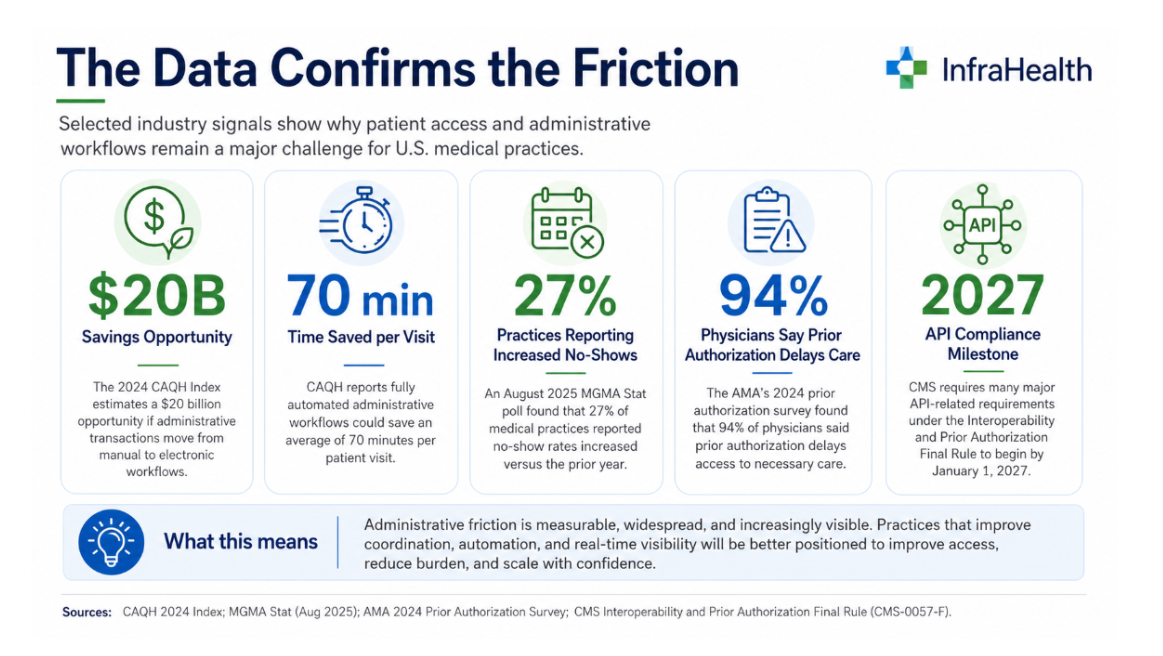
The 2024 CAQH Index found a $20 billion savings opportunity if the healthcare industry moves more administrative transactions from manual to electronic workflows. CAQH also reported that fully automated administrative workflows could save an average of 70 minutes per patient visit.
Where does friction appear?
MGMA has connected patient access challenges to no-shows, administrative burden, and phone bottlenecks. Prior authorization adds another layer: the 2024 AMA prior authorization survey reported that 94% of physicians said prior authorization delays access to necessary care.
The direction is clear: patient access is becoming more digital, more connected, and more accountable. But many practices are still operating with fragmented workflows, overloaded staff, and limited real-time visibility.
The Front Office Is Carrying Too Much Complexity
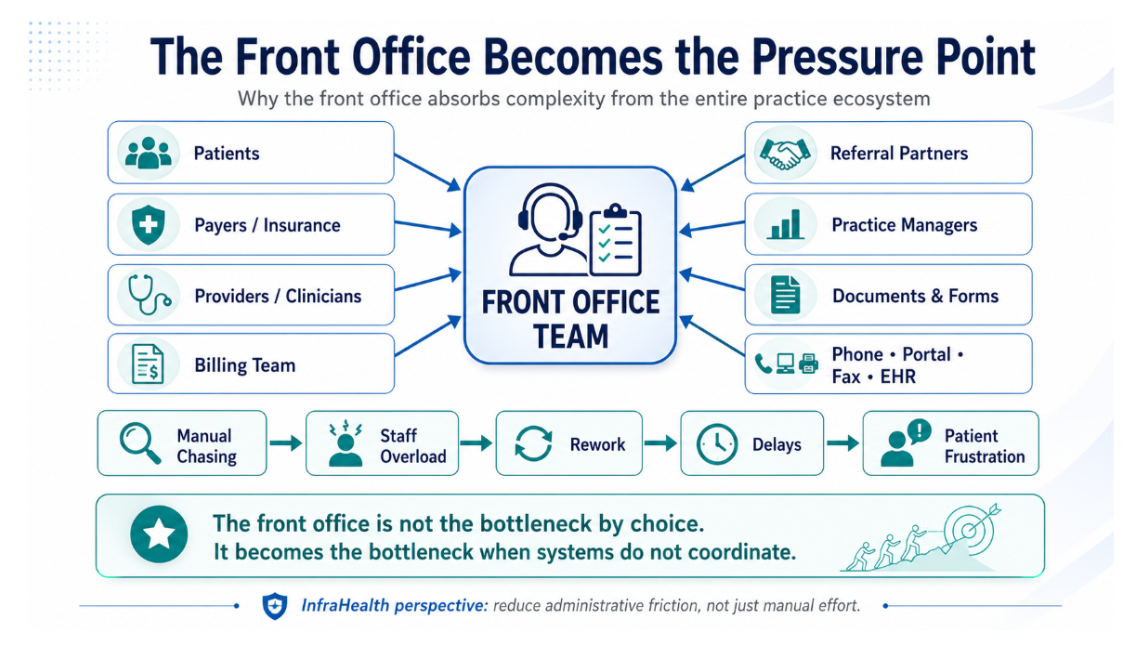
The front office often becomes the human shock absorber for the entire healthcare system. Patients call because they do not understand coverage. Payers require verification. Providers need the right information before the visit. Billing teams need accurate demographics and insurance data. Referral partners need coordination. Managers need schedules filled.
This creates an impossible expectation: be fast, accurate, empathetic, compliant, financially aware, and operationally efficient all at the same time.
It is a system design problem. The goal is not to replace the front office. The goal is to give the front office a better operating system.
Where Access Breaks
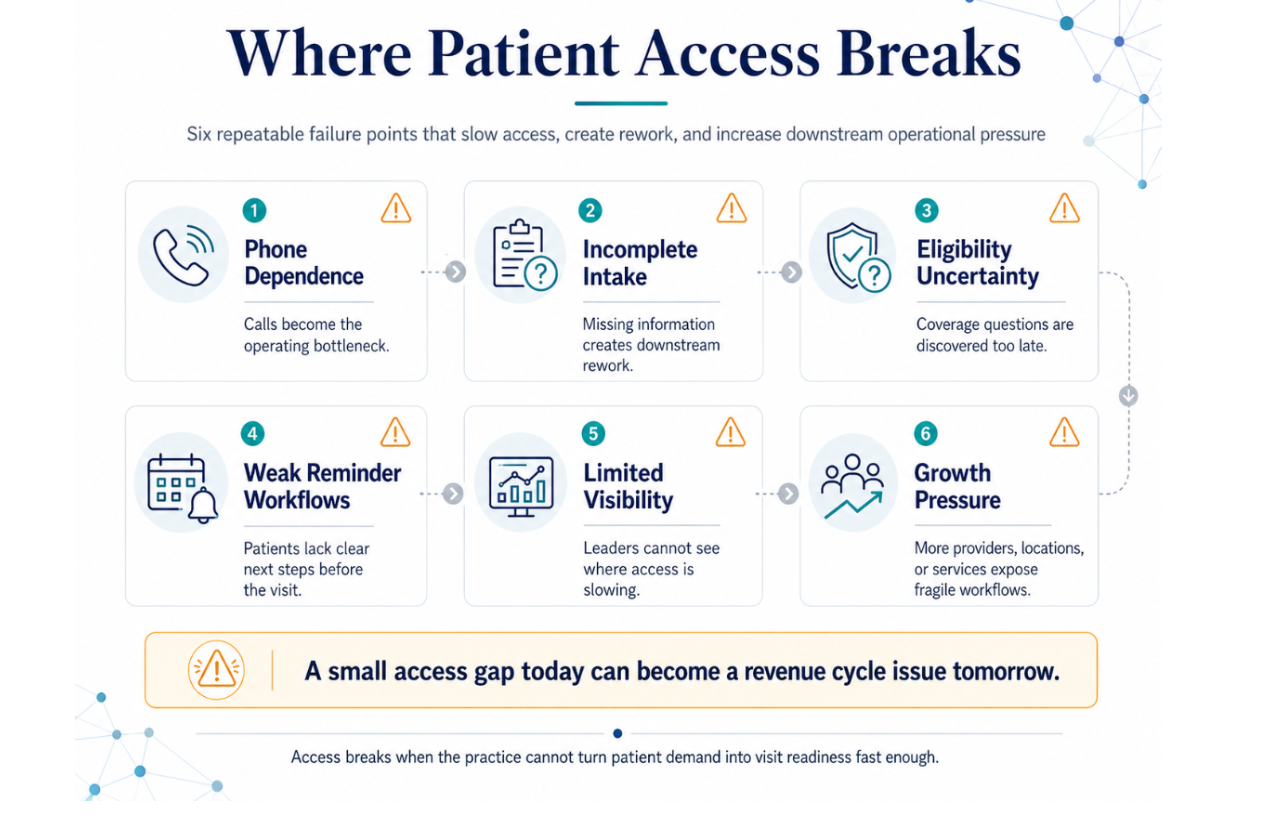
In most practices, patient access friction shows up in repeatable places: phone dependence, incomplete intake, eligibility uncertainty, poor reminder workflows, limited visibility, and growth pressure.
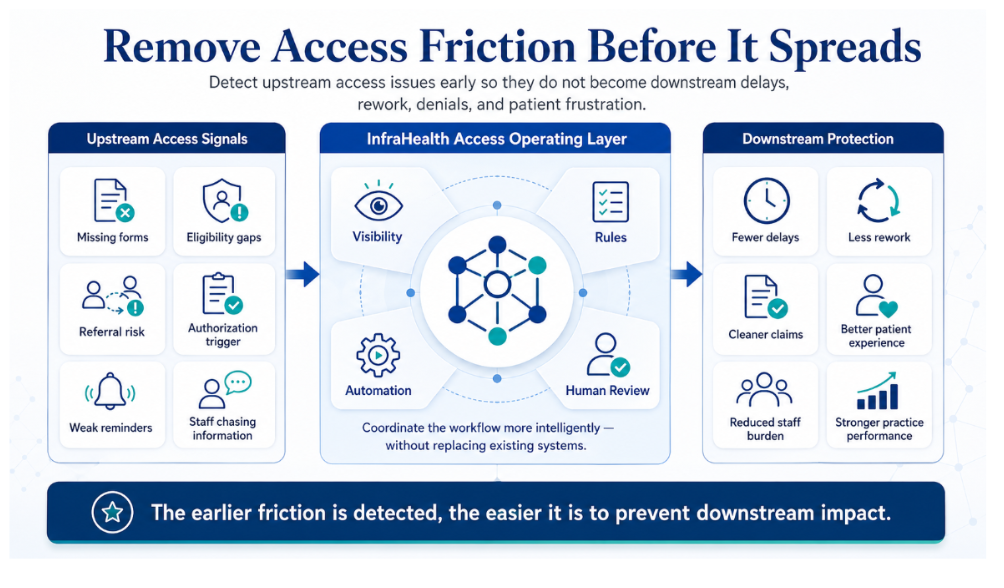
These breakdowns create a chain reaction. A small access gap today becomes a revenue cycle issue tomorrow.
The Revenue Cycle Starts at the Front Door
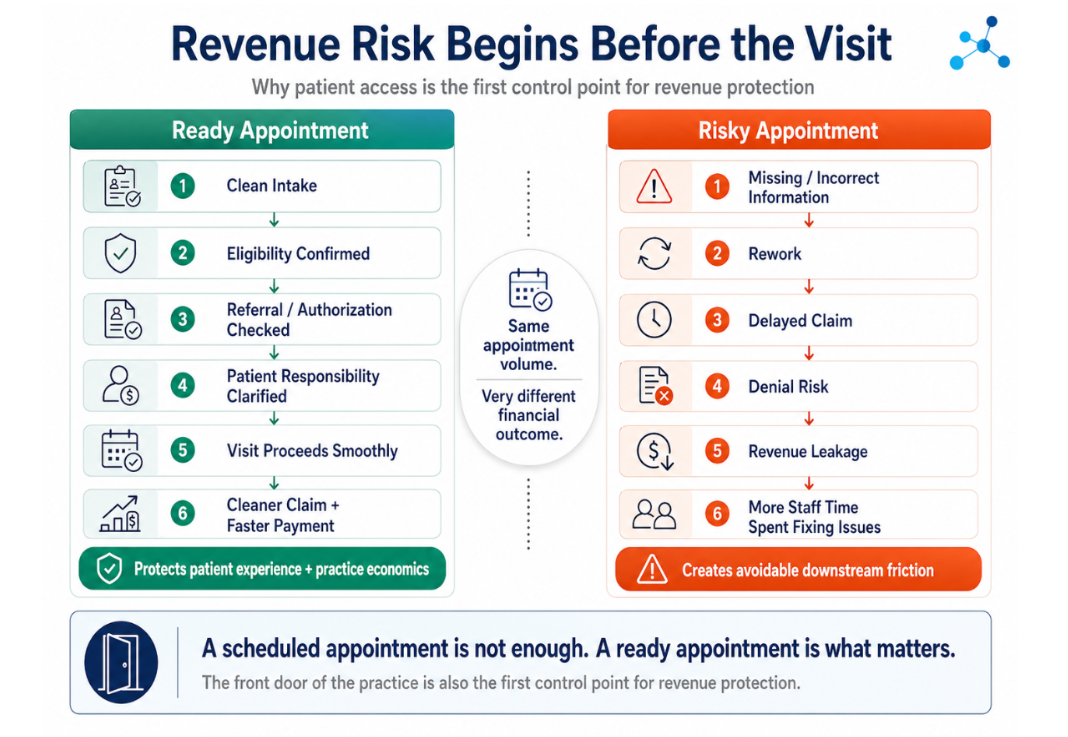
Revenue cycle management does not begin after the visit. It begins when the appointment is created.
If the patient’s insurance is wrong, the claim is already at risk. If referral requirements are missed, the claim is already at risk. If prior authorization requirements are not triggered, the visit or procedure may be delayed or denied.
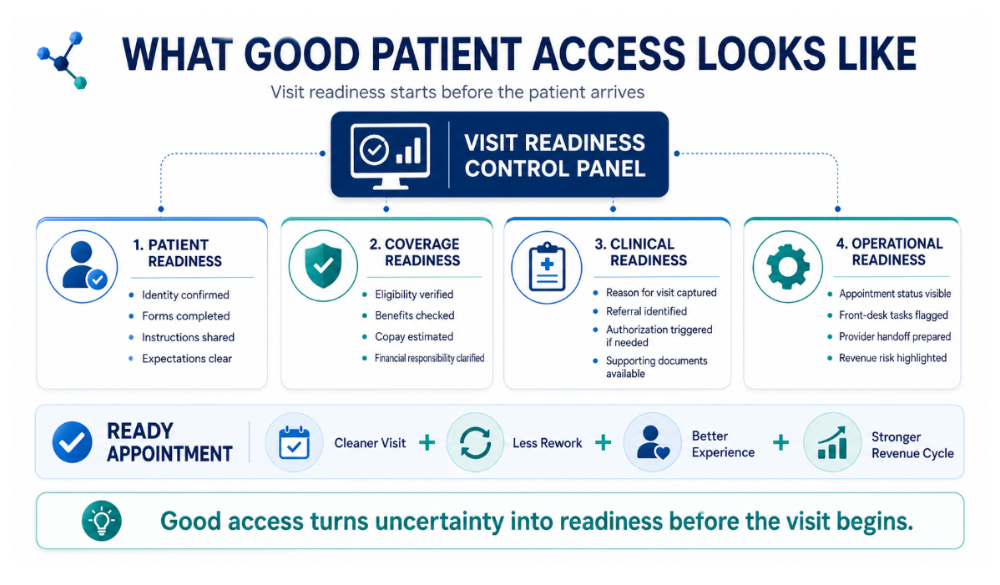
A scheduled appointment is not enough. A ready appointment is what matters.
What Good Looks Like
A strong patient access model creates clarity before the patient arrives. The patient can find the right provider, schedule through the right channel, submit information once, complete eligibility early, understand missing items, receive clear reminders, and arrive with fewer surprises.
This is not about replacing people. It is about giving people a better operating system that reduces uncertainty, protects staff capacity, and helps the practice move from scheduled appointments to ready appointments.
The InfraHealth Perspective: Remove Access Friction Before It Spreads
At InfraHealth, we believe patient access is one of the most important places to eliminate administrative friction because it sits upstream of care delivery, revenue cycle, patient experience, and staff productivity.
The goal is not to add another portal, replace the EHR, or force practices into a disruptive transformation. The goal is to coordinate the access workflow more intelligently.
Where are patients getting stuck before the visit?
Which appointment types create the most downstream issues?
Which payers create eligibility or authorization friction?
Which reminders actually reduce no-shows?
Which access tasks can be automated safely?
Which cases require human review?
What Practices Should Measure
To improve access, practices need a small set of practical metrics, not hundreds of dashboards. Start with the signals that show whether patient demand is becoming visit readiness.
Conclusion: Access Is the First Moment of Trust
Patient access is not just the beginning of the visit. It is the beginning of trust.
When the access experience is confusing, patients start the relationship with doubt. When the access experience is clear, patients feel guided. Staff feel prepared. Providers feel supported. Revenue cycle teams receive cleaner information. Leaders get better visibility.
At InfraHealth, this is exactly the kind of problem we are focused on: helping healthcare organizations eliminate administrative friction so access to care becomes faster, clearer, and more reliable.
In the next article, we will go deeper into eligibility verification and prior authorization, the point where patient access, payer rules, clinical readiness, and financial risk begin to collide.
Talk to InfraHealth ->